The Quanfire blog
We build AI for professional-services firms — including our own domain models where it counts. Here's how we think, what we ship, and the evidence behind it.
Research & Engineering
How we build our own models, and how we measure them.
 Research & Engineering
The retrieval number we took back before we published it
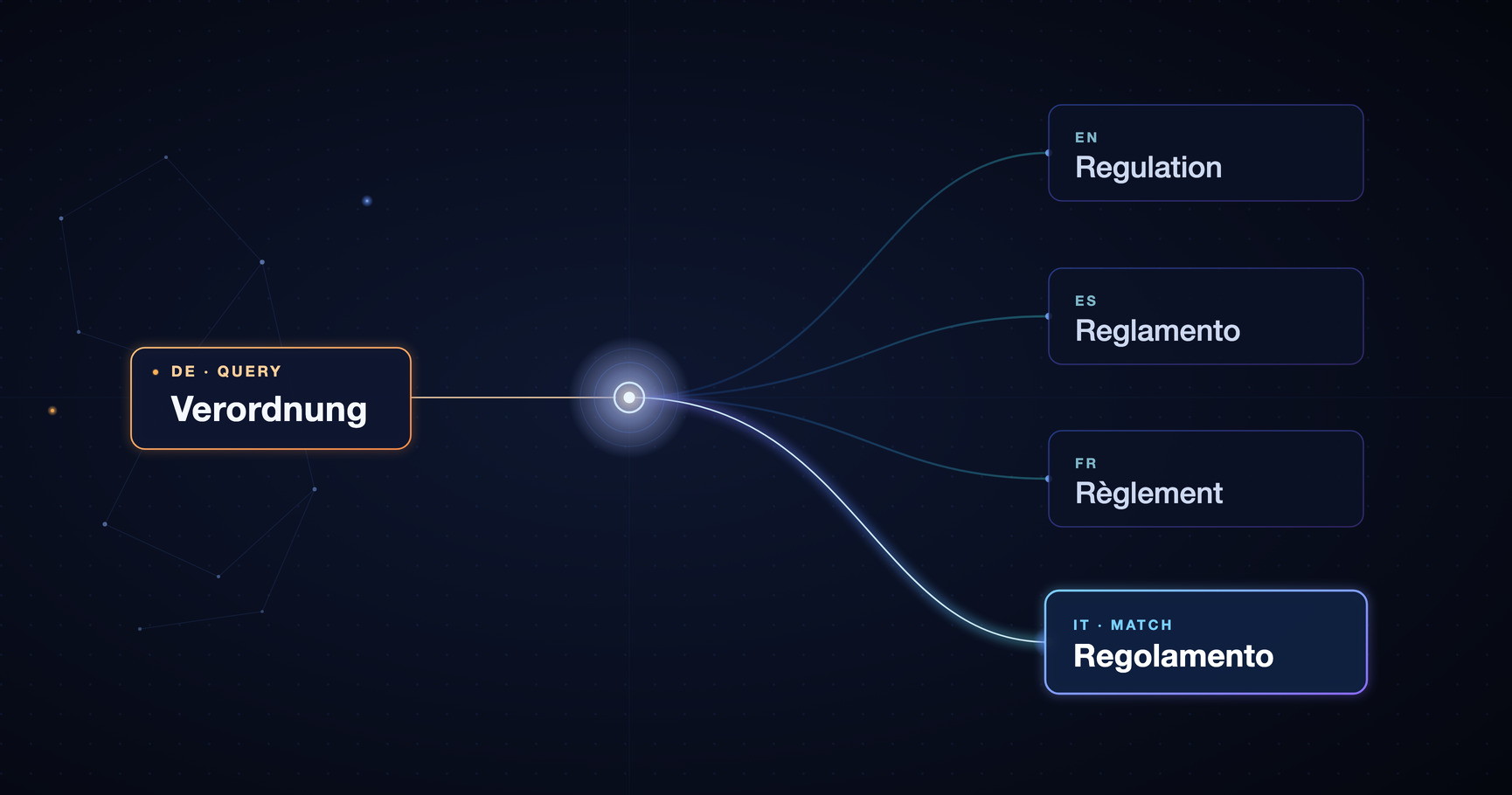
We built a cross-lingual retriever for EU law: give it a provision in one language and it finds the match in another, across German, English, Spanish, French and Italian. Our first run scored +126.3% on a split that leaked; we retracted it before publishing, and it is not a larger version of the number below, because it never measured generalisation at all. On a split that holds out whole units, the clean number is recall@1 0.2919 to 0.6480, a +122.0% gain with intervals that do not overlap. This time the check ran before the post did.
 Research & Engineering
We trained the same model five more epochs. Then a clean split took the number back.
We published a 53% Recall@1 gain for this model. It was measured on a split that leaked, and we have withdrawn it. A clean re-run of the same corpus and recipe scores 0.1836 to 0.2518, +37.1%, intervals disjoint. Those are different weights: the ones this post announced were never re-measured and have no clean number. The per-language result changed too.
 Research & Engineering
Harder training examples made our reranker worse. Here is the curve that fixed it.
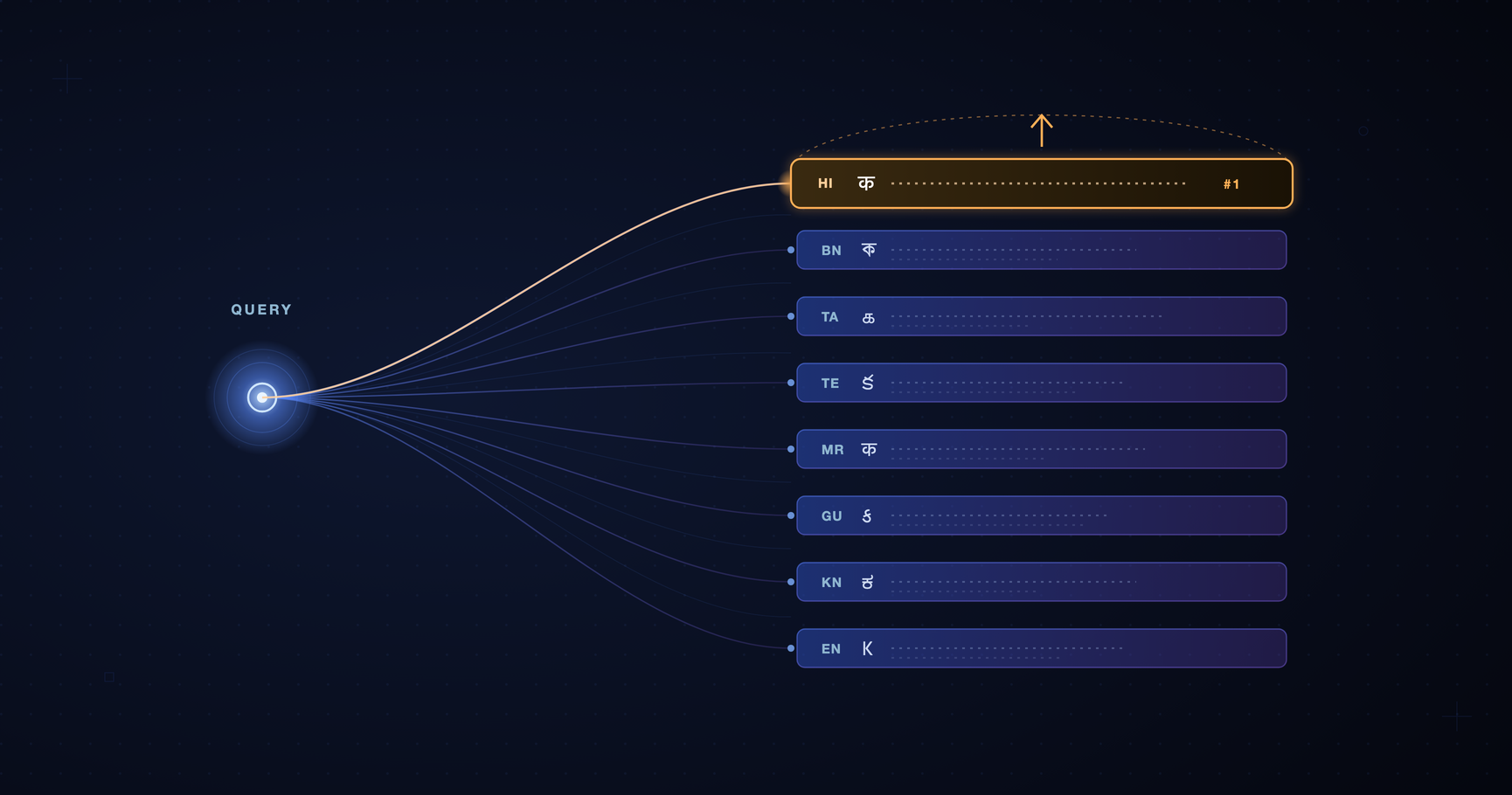
We open-sourced rerank-gov-indic, a cross-lingual reranker for Indian government text. Correction (2026-08-23): the negative-hardness curve in this post was trained unseeded, so its "sweet spot" ordering is not established. See the correction note on the post.
 Research & Engineering
We withdrew this reranker's +63.8%: it was measured on a split that leaked. The retrained model gains +47.2%.
We published a +63.8% Recall@1 gain for our first reranker. It was measured on a split that leaked, and we have withdrawn it. A retrained model, published as revision v2.0.0, was measured on a document-isolated split with 18 of 856 Central Acts held out entirely, and gains +47.2% (Recall@1 0.0723 to 0.1064, paired interval excludes zero). Those are different weights: the ones this post announced, v1.0.0, carry no valid number.
 Research & Engineering
We said our legal model was weak on statutes. Here is the one that is not.
We open-sourced embed-statute-en, a 2.4 MB adapter for retrieving Indian central statutes. On the un-gameable low-overlap slice it more than doubles Recall@1 (+131%), with the numbers, confidence intervals, and provenance to check it yourself.
 Research & Engineering
Retrieval across 16 Indian languages, and the receipts to check it
We open-sourced embed-gov-indic: a 2.4 MB adapter that retrieves Indian government press releases across 16 languages, +27.9% Recall@1 over the base model. The model is public and the method is documented, so you can pull it and judge it on your own text.
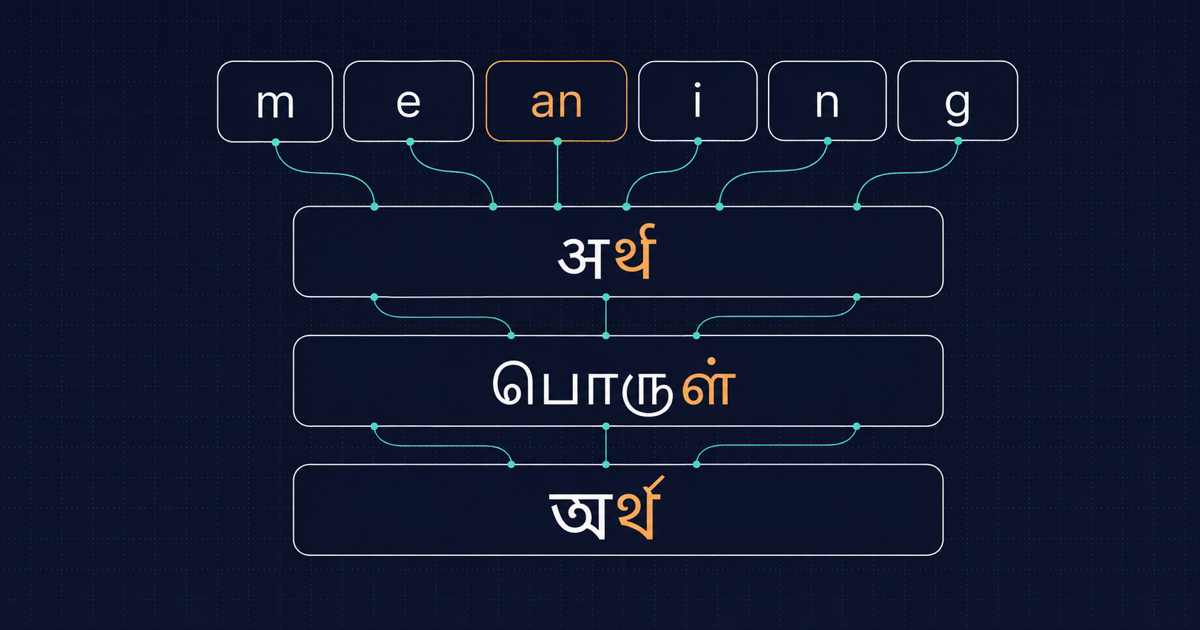 Research & Engineering
Don't take our word for it: read the tokens yourself
Quanfire's multilingual embeddings are live on Hugging Face: Indic-first, openly licensed, trained only on clean, documented data, verifiable in your browser.
 Research & Engineering
The judgment is public domain. The headnote is not.
A court judgment is public domain; the headnote printed above it is not. How we excised the copyrighted layer so a legal embedding ships Apache-2.0.
For Practitioners
Where AI actually helps professional-services teams — and where it doesn't.
 For Practitioners
MRR is not "average rank"
An MRR of 0.50 can hide two very different systems. Why the mean misleads, when MRR is the right metric, and the two numbers to report with it.
 For Practitioners
Two systems, identical recall, one of them useless
Two retrievers with identical recall can rank results so differently that one is useless. nDCG@k tells them apart by grading relevance and discounting by position. How to compute it, choose k, and read the tail.
 For Practitioners
Recall@k is the ceiling on everything else
Recall@k caps every downstream retrieval metric. Why to measure it first, the averaging trap that invalidates most published recall numbers, and the pooling bias that punishes better retrievers.
 For Practitioners
What DocPro search does when the embedding model is down
DocPro semantic search runs on an embedding model we host ourselves. Here is the architecture, and the fallback that keeps search answering when it is not.